
 EN
Classic cars represent decades of automotive heritage and craftsmanship, yet they face a persistent threat that time and weather cannot spare: rust. The metallic surfaces of vintage vehicles are particularly vulnerable to corrosion, which undermines both structural integrity and aesthetic appeal. This is where epoxy primer becomes a critical defense mechanism. Epoxy primer functions as a molecular barrier between bare metal and environmental contaminants, forming a protective shield that prevents moisture and oxygen from initiating corrosion cycles. Understanding how this technology works illuminates why serious classic car enthusiasts rely on epoxy-based systems for long-term preservation.
The chemistry behind epoxy primer's rust prevention capability lies in its cross-linked polymer structure and adhesive strength. When properly applied to prepared metal surfaces, epoxy primer bonds at a molecular level, creating a layer that is chemically resistant to salt, humidity, and oxygen exposure. This film thickness and chemical resilience far exceed standard primers, offering classic car owners extended protection against the accelerated corrosion that can occur in coastal environments or regions with harsh winter conditions.
Metal Surface Preparation: The Foundation of Protection
Why Preparation Matters Before Epoxy Primer Application
Metal surface preparation is the cornerstone of effective epoxy primer performance. Without proper preparation, even the highest-quality epoxy primer cannot establish adequate adhesion to the underlying substrate. Rust, mill scale, dust, grease, and old paint residue act as barriers, preventing the epoxy from bonding directly to clean metal. Classic car restoration specialists understand that rushing through surface preparation is the most common cause of premature coating failure.
Surface preparation involves several critical steps that remove contaminants and create mechanical and chemical receptivity. Sanding or media blasting removes corrosion and establishes a profile that allows epoxy primer molecules to interlock with the metal surface. Degreasing eliminates oils and residues that could interfere with bonding. This foundation ensures that when epoxy primer is applied, it adheres uniformly and maintains continuous protection without pinholes or adhesion gaps where moisture could penetrate.
Tools and Techniques for Optimal Metal Surface Preparation
Industry standards recommend achieving a surface profile of 75 to 125 microns for optimal epoxy primer adhesion on automotive panels. Grit blasting with aluminum oxide or other abrasive media accelerates this process while maintaining consistency across large panels. For detailed areas or sections where aggressive blasting may damage thin metal, hand sanding with 80 to 120-grit sandpaper provides controlled surface roughness. The goal is uniform texture that maximizes the contact area between epoxy primer and metal.
After mechanical surface preparation, chemical treatment enhances metal surface preparation further. Phosphate conversion coatings or specialized metal etching solutions chemically bond to steel, creating a substrate that epoxy primer responds to exceptionally well. These pre-treatment steps prevent flash rusting during the interval between cleaning and primer application, a common challenge in humid restoration shops. Classic car professionals often apply chemical surface preparation within minutes of blasting to lock in the prepared state.
Epoxy Primer Application Methods and Rust Prevention Mechanics
Spray Application for Uniform Coverage and Film Thickness
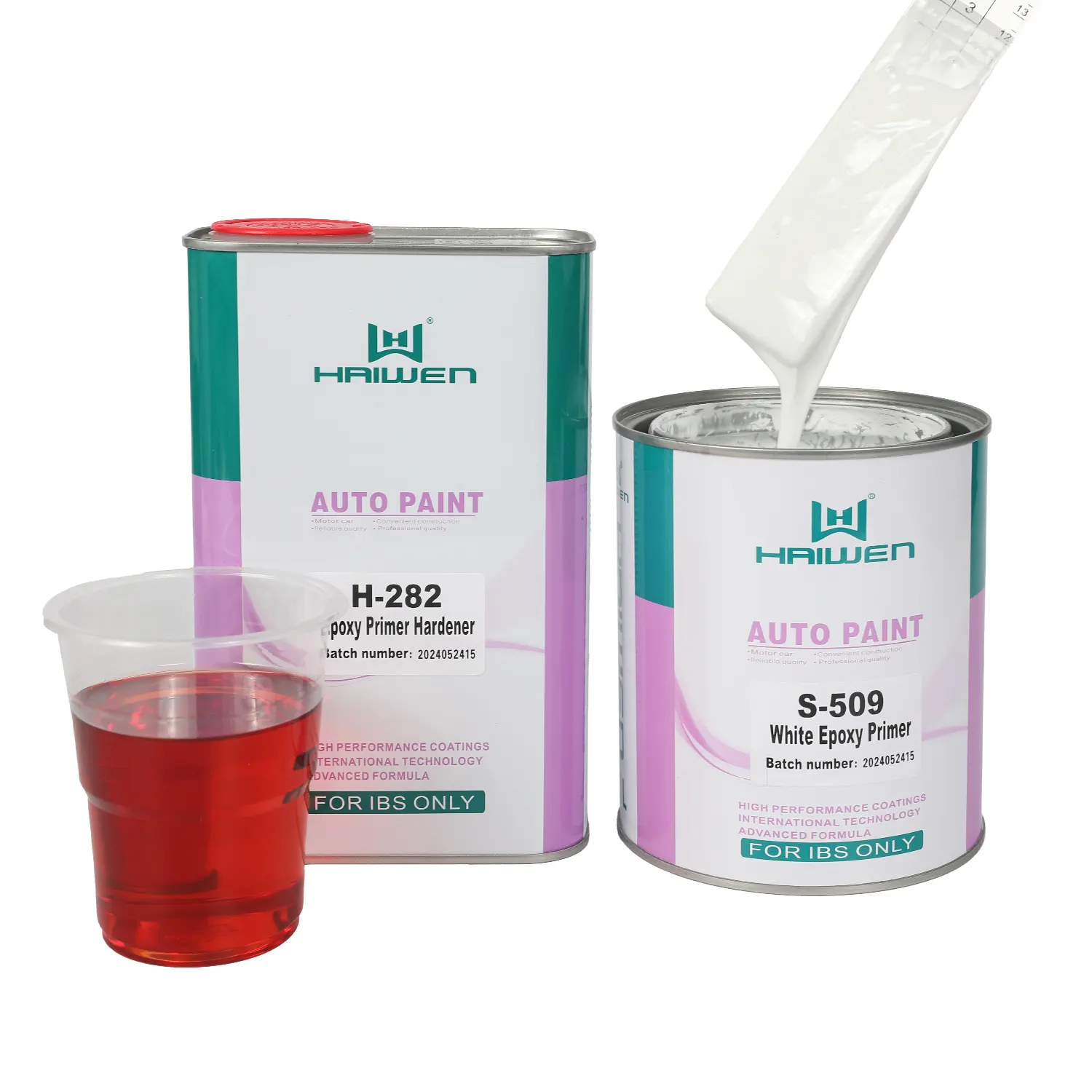
Spray application represents the most common epoxy primer application method in professional automotive restoration. Two-component epoxy formulations must be mixed immediately before application, initiating the cross-linking reaction that creates the protective polymer network. Spray equipment delivers uniform film thickness across large panels, with typical application rates producing 75 to 150 microns of dry epoxy primer film. This thickness is critical because it establishes the chemical barrier that prevents rust formation at the metal-coating interface.
Proper spray technique requires controlling application pressure, nozzle distance, and overlap patterns to avoid runs, sags, or thin spots. Professional restoration shops maintain spray equipment at precise settings to ensure consistent results across entire vehicle panels. The epoxy primer application method used in production environments differs from DIY approaches primarily in equipment investment and technique precision. Automotive professionals typically employ HVLP or air-assisted spray systems that atomize epoxy primer while minimizing overspray and ensuring molecular-level film uniformity.
How Epoxy Primer vs Polyurethane Coating Affects Rust Prevention Strategy
When comparing epoxy primer vs polyurethane coating for rust prevention on classic cars, the distinction centers on application purpose rather than interchangeability. Epoxy primer serves as a corrosion barrier applied directly to metal, creating the molecular seal that prevents rust initiation. Polyurethane topcoats, by contrast, provide UV resistance, color retention, and weathering protection over the epoxy primer foundation. The two work synergistically: epoxy primer prevents rust at the metal interface, while polyurethane coating protects the epoxy layer from environmental degradation.
Understanding epoxy primer vs polyurethane coating helps classic car owners appreciate why restoration professionals recommend both products as a system rather than selecting one or the other. Epoxy primer alone, if left exposed without topcoat protection, will eventually yellow and chalk from UV exposure, compromising its protective qualities. Polyurethane without epoxy primer provides no corrosion barrier to bare metal. The optimal rust prevention strategy layers epoxy primer as the adhesive barrier over properly prepared metal, then applies polyurethane topcoat to shield the entire system from environmental attack.
Practical Implementation and Long-Term Rust Prevention Benefits
Application Timeline and Cure Characteristics
Epoxy primer cure schedules directly influence how quickly classic car restoration projects advance and when topcoats can be applied. Most automotive two-part epoxy primers reach tack-free status within 30 to 60 minutes at standard room temperature, allowing handlers to move panels without fingerprinting or transferring dust. However, chemical cross-linking continues for extended periods, with full cure sometimes requiring 24 to 72 hours depending on formulation and environmental conditions. Rushing topcoat application before epoxy primer fully cures can trap solvents and create adhesion issues that compromise long-term rust prevention.
Temperature and humidity influence epoxy primer cure rates significantly. Cooler temperatures slow cross-linking reactions, extending working time but delaying topcoat readiness. Elevated humidity can cause surface blooming or moisture entrapment if epoxy primer is applied in unsuitable conditions. Professional shops maintain controlled spray environments with stable temperature and humidity to ensure predictable cure behavior and optimal properties in the final coating system protecting classic metal surfaces.
Inspection and Recoating for Extended Protection
Classic cars stored outdoors or exposed to harsh marine environments benefit from periodic inspection and recoating protocols. Even well-applied epoxy primer eventually degrades under extended UV exposure, particularly if polyurethane topcoat has been compromised by stone chips, scratches, or accident damage. Inspection routines should identify any areas where bare metal has been exposed or where topcoat erosion has begun exposing underlying epoxy primer. Early intervention with localized recoating prevents corrosion from establishing itself at damaged sites.
Maintaining comprehensive epoxy primer protection over decades requires treating touch-ups and repairs as integral restoration activities rather than cosmetic afterthoughts. When damage exposes bare metal on a classic car, proper repair procedure calls for removing old coating back to clean metal, applying fresh metal surface preparation, and recoating with epoxy primer and topcoat to match the original system. This commitment to proper technique preserves the rust prevention barrier that protects classic metal from corrosion.
FAQ
How long does epoxy primer protect metal from rust?
When properly applied over prepared metal surfaces and protected by polyurethane topcoat, epoxy primer can protect classic cars from rust for 10 to 20 years or longer depending on environmental exposure and storage conditions. Covered storage significantly extends protection duration. The key to longevity is maintaining the topcoat integrity and addressing any chips or damage promptly to prevent moisture penetration to the epoxy layer beneath.
Can epoxy primer be applied over existing rust on classic cars?
No, epoxy primer cannot be applied directly over existing rust. All corrosion must be removed through sanding, blasting, or chemical stripping before epoxy primer application. Rust left under the coating will continue spreading beneath the epoxy layer, eventually causing coating failure and accelerated metal loss. Proper metal surface preparation is non-negotiable for rust prevention success.
What is the difference between epoxy primer application methods?
Spray application offers the most uniform coverage and thickness consistency, making it the professional standard for classic car restoration. Brush or roller application is possible but produces thinner, less uniform films prone to inconsistent protection. Spray-applied epoxy primer creates superior barrier properties compared to hand-applied methods, which is why serious collectors invest in professional spray equipment or hire experienced technicians.