
 EN
EN
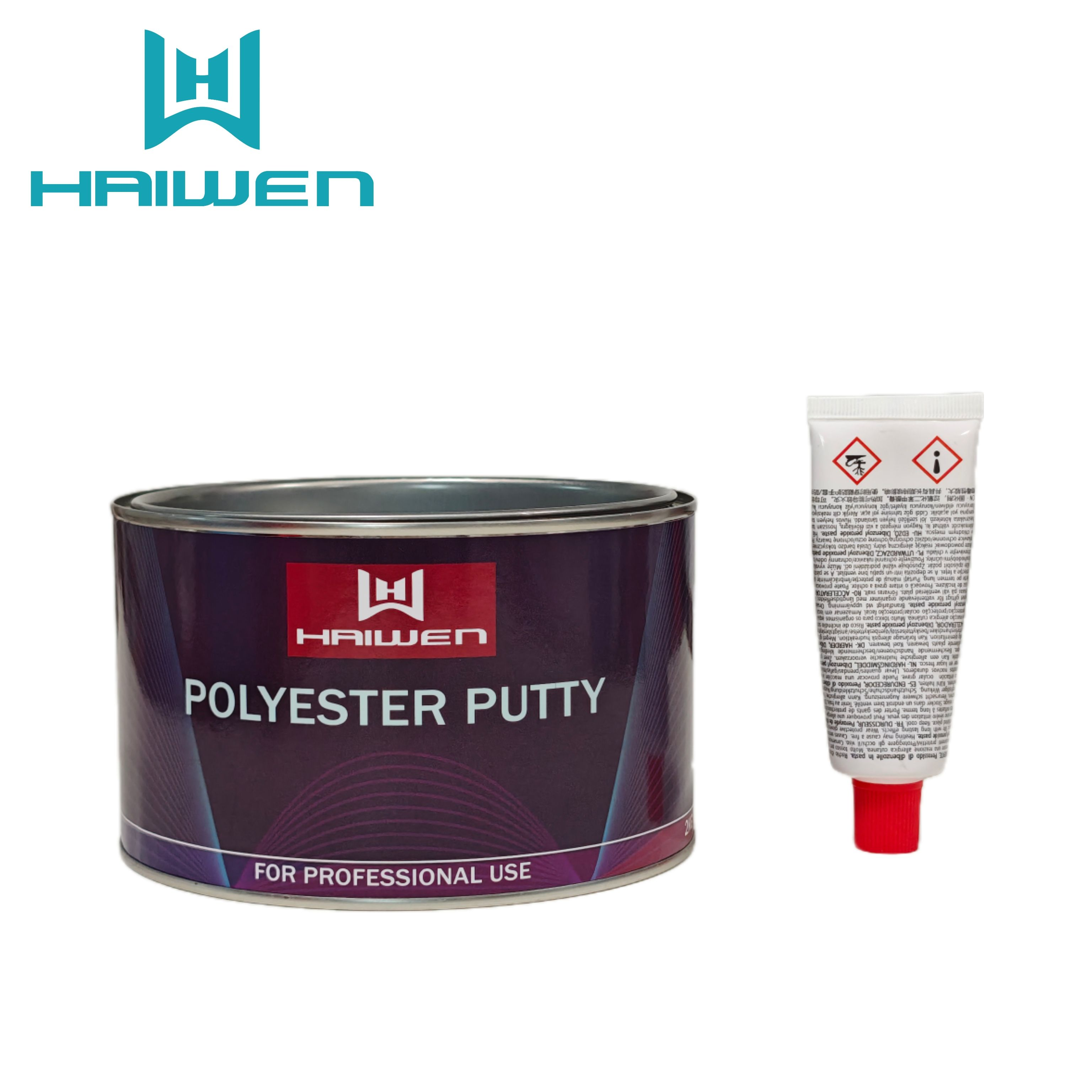
Poly putty serves as a critical component in automotive bodywork, specifically designed to create smooth, uniform surfaces on body panels before final painting. This specialized filler material works by filling minor imperfections, smoothing surface irregularities, and providing a consistent base that ensures professional-quality paint application. Understanding how poly putty functions in surface leveling helps automotive professionals achieve superior finish quality while reducing paint defects and improving overall appearance.
The mechanism by which poly putty improves surface leveling involves its unique formulation and application properties. When applied to automotive body panels, poly putty creates a bridging effect across small dents, scratches, and surface variations, essentially building up low areas to match surrounding panel contours. This leveling action eliminates the visual distortions and surface imperfections that would otherwise telegraph through the final paint finish, resulting in a mirror-like surface quality that reflects light uniformly across the entire panel.
Chemical Composition and Surface Interaction
Polyester Resin Matrix Properties
The effectiveness of poly putty in surface leveling stems from its polyester resin matrix, which provides excellent adhesion and filling capabilities. This resin system creates strong molecular bonds with metal substrates, ensuring that the filler material becomes an integral part of the panel surface rather than just a temporary coating. The polyester matrix also exhibits minimal shrinkage during curing, which prevents the formation of sink marks or depressions that could compromise surface smoothness.
Within the poly putty formulation, the polyester resin acts as a binder that holds filler particles in suspension while providing structural integrity. When catalyzed and applied, this matrix penetrates microscopic surface irregularities, creating mechanical adhesion points that anchor the material firmly to the substrate. The chemical cross-linking that occurs during curing transforms the liquid poly putty into a solid, sandable material that maintains dimensional stability throughout temperature cycles.
Filler Particle Distribution
The filler particles within poly putty play a crucial role in achieving optimal surface leveling by providing volume and structure to the cured material. These carefully sized particles create a dense, uniform matrix that resists settling and provides consistent thickness across the application area. The particle distribution ensures that the poly putty maintains its leveling properties even when applied in varying thicknesses, preventing sagging or uneven buildup that could create new surface irregularities.
Modern poly putty formulations incorporate multiple filler particle sizes to optimize surface leveling performance. Larger particles provide bulk and structural support, while smaller particles fill voids between larger ones, creating a dense, smooth surface when sanded. This multi-modal particle distribution allows the poly putty to conform to complex panel contours while maintaining sufficient body to bridge gaps and depressions effectively.
Application Mechanics for Optimal Leveling
Surface Preparation Impact
Proper surface preparation directly influences how effectively poly putty can improve surface leveling on automotive body panels. Clean, properly etched metal surfaces provide optimal adhesion points for the poly putty, ensuring that the material bonds securely without creating interfacial weakness that could lead to future failure. Surface contamination, oxidation, or improper cleaning can prevent proper adhesion, resulting in poor leveling performance and potential delamination.
The microscopic surface texture created during preparation also affects poly putty leveling capabilities. Properly abraded surfaces provide mechanical anchoring points that help the poly putty conform to panel contours while maintaining consistent thickness. This mechanical bonding supplements the chemical adhesion provided by the polyester resin, creating a robust interface that supports the leveling function throughout the service life of the repair.
Application Technique and Thickness Control
The technique used to apply poly putty significantly affects its surface leveling performance on automotive body panels. Proper spreading technique ensures uniform distribution across the repair area, preventing thickness variations that could create new surface irregularities. Skilled application involves working the poly putty into surface depressions while feathering edges to blend seamlessly with surrounding panel areas.
Thickness control during poly putty application is critical for achieving optimal surface leveling results. Excessive thickness can lead to shrinkage, cracking, or poor adhesion, while insufficient thickness may not adequately fill surface imperfections. The ideal application thickness varies depending on the severity of surface irregularities, but generally ranges from thin skim coats for minor imperfections to thicker applications for more significant surface damage.
Curing Process and Surface Development
Chemical Cross-Linking Progression
The curing process of poly putty involves complex chemical cross-linking reactions that transform the applied material from a workable paste into a hard, sandable surface. During this process, the polyester resin molecules form three-dimensional networks that trap filler particles and create the structural integrity necessary for effective surface leveling. Understanding this curing progression helps ensure optimal application timing and prevents premature disturbance that could compromise leveling performance.
As poly putty cures, it undergoes volumetric changes that must be considered for optimal surface leveling. High-quality formulations minimize shrinkage through carefully balanced catalyst systems and filler loading, ensuring that the cured surface maintains the dimensional accuracy established during application. The curing exotherm also plays a role in surface development, with controlled heat generation promoting thorough cross-linking without causing thermal distortion.
Surface Hardness Development
The development of surface hardness during poly putty curing directly affects subsequent sanding and finishing operations that are critical for achieving optimal surface leveling. As the material cures, it transitions from a soft, easily deformed state to a hard surface that can be precisely shaped through sanding. This hardness development must be uniform throughout the application thickness to prevent soft spots that could compromise surface quality.
Proper surface hardness in cured poly putty allows for precise contouring during sanding operations, enabling technicians to fine-tune surface leveling and eliminate any minor imperfections remaining from the application process. The final hardness should be sufficient to support subsequent primer and paint layers while remaining workable enough to achieve the smooth surface finish required for high-quality automotive finishes.
Integration with Automotive Finishing Systems
Primer Compatibility and Adhesion
The effectiveness of poly putty in improving surface leveling depends significantly on its compatibility with automotive primer systems. Proper chemical compatibility ensures that subsequent primer layers bond securely to the poly putty surface without creating interfacial weaknesses that could lead to coating failure. This compatibility also affects how well the primer flows and levels over the poly putty, contributing to overall surface smoothness.
Modern poly putty formulations are designed to work seamlessly with various automotive primer systems, providing stable interfaces that support long-term coating performance. The surface chemistry of properly cured poly putty promotes primer adhesion while allowing for the slight movement that may occur due to thermal cycling or substrate flexibility. This balance ensures that the leveling benefits provided by poly putty are maintained throughout the service life of the finish system.
Paint System Performance Enhancement
The surface leveling improvements achieved through proper poly putty application directly enhance the performance and appearance of automotive paint systems. Smooth, uniform surfaces created by poly putty allow paint to flow evenly, reducing the occurrence of surface defects such as orange peel, fisheyes, or texture variations. This improved flow also enhances color uniformity and reduces the amount of paint required to achieve full coverage and depth.
The optical properties of automotive finishes are significantly enhanced when poly putty is used effectively for surface leveling. Uniform surfaces reflect light consistently, creating the deep, mirror-like appearance that characterizes high-quality automotive finishes. This optical enhancement is particularly important for metallic and pearl finishes, where surface irregularities can create uneven light reflection and color variations that detract from overall appearance quality.
Quality Assessment and Performance Validation
Surface Profile Measurement
Evaluating the effectiveness of poly putty in improving surface leveling requires systematic measurement of surface profiles before and after application. Modern surface profiling techniques can quantify the reduction in surface roughness and waviness achieved through poly putty application, providing objective data on leveling performance. These measurements help validate application techniques and identify areas where additional work may be required.
Surface profile measurements also help establish quality standards for poly putty applications, ensuring consistent results across different technicians and repair scenarios. By establishing target surface roughness values, shops can implement quality control procedures that verify the effectiveness of their poly putty applications and identify process improvements that could enhance leveling performance.
Long-term Performance Monitoring
The true effectiveness of poly putty in improving surface leveling can only be fully assessed through long-term performance monitoring of completed repairs. This monitoring includes tracking the stability of repaired surfaces under various environmental conditions, evaluating the durability of the poly putty bond, and assessing whether the initial leveling benefits are maintained over time. Such monitoring helps refine application techniques and validate material selection decisions.
Long-term performance data also provides valuable feedback for improving poly putty formulations and application procedures. Understanding how different environmental factors affect the leveling performance of poly putty helps manufacturers develop more robust products and helps shops implement protective measures that preserve the quality benefits achieved through proper application.
FAQ
How thick can poly putty be applied while maintaining good surface leveling?
Poly putty should typically be applied in thicknesses not exceeding 3-4 millimeters per coat to maintain optimal surface leveling properties. Thicker applications can lead to shrinkage, poor curing, and adhesion problems that compromise leveling effectiveness. For deeper imperfections, multiple thin coats provide better results than single thick applications.
What surface preparation is required before applying poly putty for leveling?
Surfaces must be clean, dry, and properly abraded with 80-120 grit sandpaper before poly putty application. Remove all rust, paint residue, and contaminants, then clean with appropriate solvents. The surface should have a uniform matte finish that provides mechanical adhesion for optimal poly putty bonding and leveling performance.
How long should poly putty cure before sanding for surface leveling?
Poly putty typically requires 30-60 minutes at room temperature to cure sufficiently for sanding, though this varies with temperature, humidity, and material thickness. The surface should feel hard and not yield to fingernail pressure before beginning sanding operations. Proper cure time ensures optimal leveling results and prevents clogging of sandpaper.
Can poly putty be used over existing paint for surface leveling repairs?
Poly putty can be applied over existing automotive paint if the surface is properly prepared by sanding to create mechanical adhesion. However, the underlying paint must be stable and well-adhered to prevent future failure. For critical leveling applications, removal to bare metal often provides superior long-term results and optimal surface quality.
